I have known Dr. Michelle Del Rio, MPH, PhD, for almost as many years as I have participated in the American Public Health Association (APHA’s) Children’s Environmental Health Committee, founded by Leyla McCurdy. When she first joined the group, she was still working on her doctorate in public health. Since then, she has successfully defended her dissertation, completed a postdoctoral fellowship, and, in 2022, joined the faculty of the Indiana University School of Public Health-Bloomington, in the Department of Environmental and Occupational Health. One of her key contributions to the field so far has been co-leading a sub-committee on curriculum, first with eminent expert on Children’s Environmental Health (CEH) Dr. Ruth Etzel, and since 2025 with Dr. Lindsay Tallon. She was first author on two articles our group developed: “Critical Competencies in Children’s Environmental Health” and “Performance Indicators Corresponding to the Critical Competencies in Children’s Environmental Health.” The first was featured on the cover of NEHA Journal of Environmental Health in 2023.
Michelle has subsequently implemented these competencies and indicators in courses and a new minor, the first of its kind, at her university. What is really at work here, however, is the creation and codification of CEH as a recognized area of study. Given the relative neglect of Environmental Health in the arena of Public Health, this work comes none too soon.
Despite years of attending the same online meetings and working on two substantial publications, there was much I did not know about Michelle, though I was aware that she had participated in Dr. Leslie Rubin’s Break the Cycle program. Though she originally was just aiming to finish high school, she completed a PhD and landed an important job at a flagship university.
One thing that comes through with Michelle is just how hard she works, and how that hard work – and the strong belief and support of her mentors – has made her a formidable presence so early in her fledgling career. Hers is a dramatic story of finding purpose, not only for herself but to serve the common good. On a personal note, I will add that she has been an absolute delight to work with.
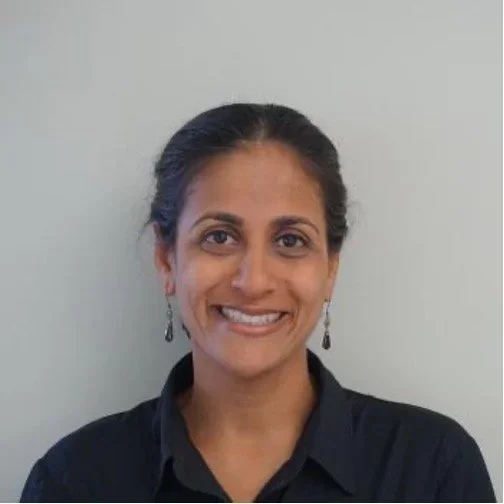
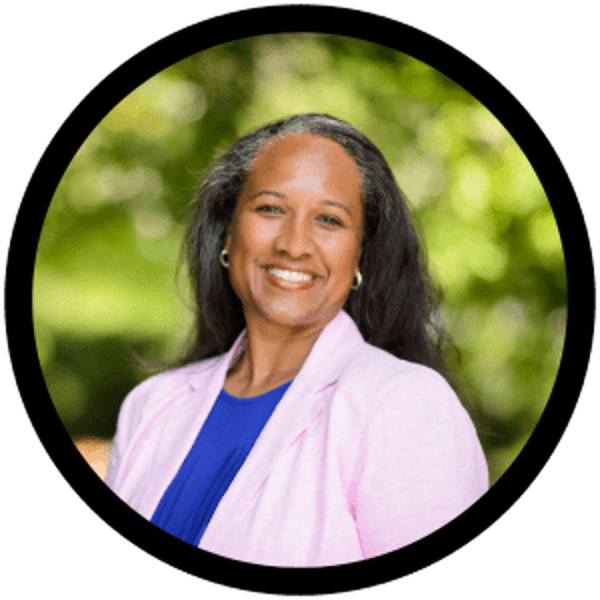
Figure 1: Dr. Michelle del Rio
This interview has been lightly edited for length and clarity.
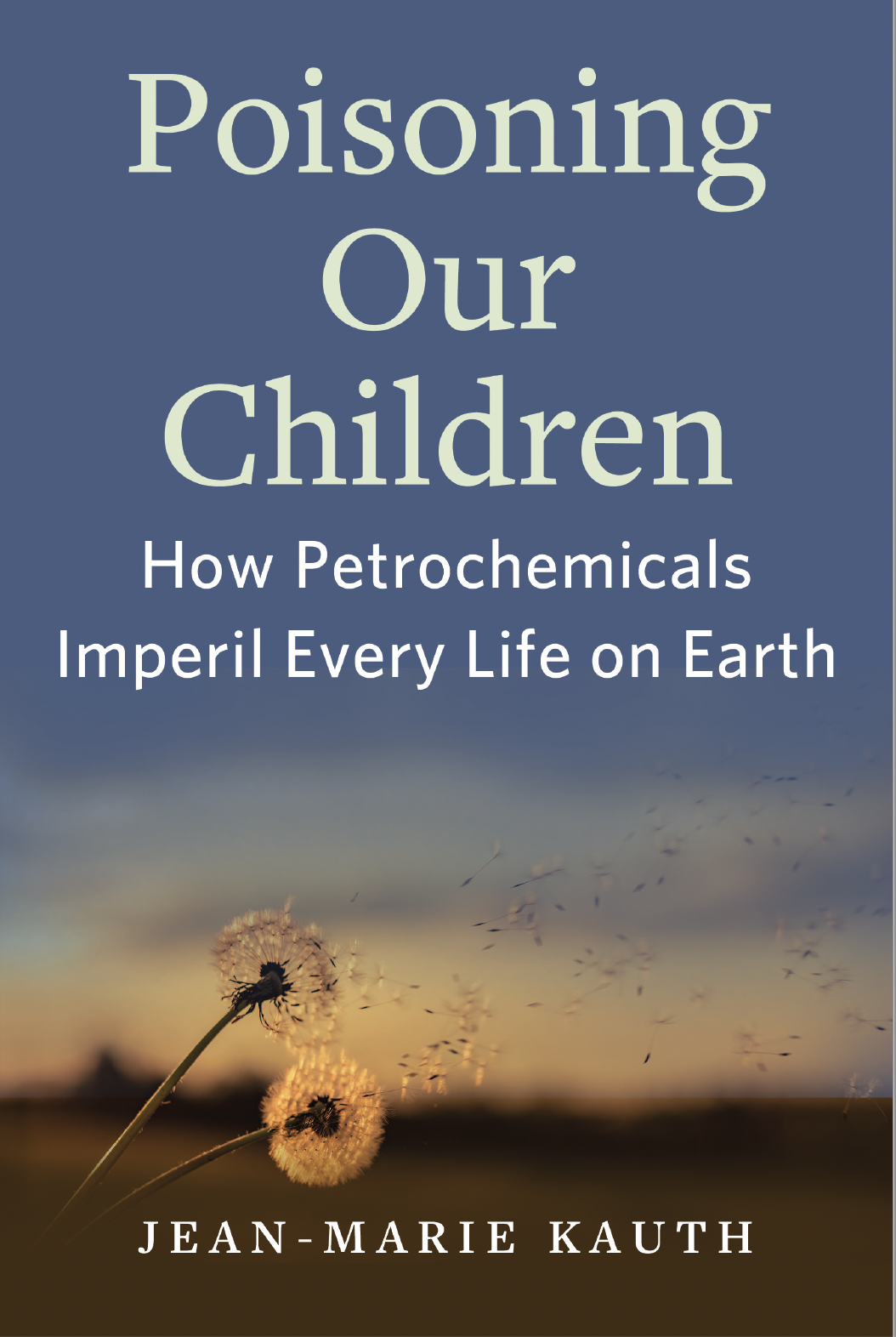
The book I have worked towards for more than 20 years, Poisoning Our Children, is now available for pre-order at https://www.press.jhu.edu/books/title/54124/poisoning-our-children
Pre-orders are hugely important, as they affect whether bookstores stock the book, how algorithms surface it, and how seriously publishers take authors. Your support matters more than you know. All author profits will be donated to Environmental Health non-profits.
JMK: Hey, Michelle – so glad to see you! Could you please tell me your story in your own words?
MDR: I guess I could start with what inspired me to get into this field and how I ended up in my career in Children’s Environmental Health (CEH). I grew up in El Paso Texas, which is a border community to Mexico, and we are sister cities with Ciudad Juarez. It’s unique in the whole world. We are a very unified community. We’re biracial, binational. You can live your whole life without speaking English. It’s composed of 82% Hispanic/Latino community, and it’s rich in culture and spirituality. We’re mainly Catholic.
I grew up along the Mexico border in an area called the Lower Valley. This area is mainly low income. Growing up, I realized that our neighborhoods looked very different from other parts of the city – the more affluent areas. I always knew that the opportunities that I had through education and employment or careers were so different from those who grew up elsewhere. Why? Why didn’t we have the same opportunities?
If you travel even further south of the Lower Valley, there are communities that still need water access. There are a lot of areas where they don’t have enough water or proper sanitation. So, they are having to haul water, and septic systems are failing, which impacts their overall health.
There are lot of dirt roads, lack of access to parks, education, or employment opportunities. I also saw a lot of chronic disease. A lot of people were talking about their diabetes and heart problems, kidney disease. And so I always thought there must be some connection there with where we lived.
In high school, I was a very troubled child. I had no guidance, no direction. And I didn’t really care what happened after high school. My mom said as long as you graduate and are not a teen parent, we are good. My older siblings were teen parents at ages 16 and 14. So for me to not be a teen parent was the goal – and to finish high school. My mother had a third-grade education. My father finished high school, but he immediately enrolled in the army after that. So my bar was really low.
I was interested in improving community health in some way, but I didn’t know what that path looked like. My only connection then was a path in medicine. So I thought, well, maybe if I go into medical school, maybe I can come up with solutions that would help my community.
I graduated top 10% of my class of 300 students – but I didn’t apply to colleges. I didn’t care, and I didn’t know who to ask. Who do I model? But I knew that I loved learning and that the local university, the University of Texas at El Paso, was available for me. And so I went into pre-med and did a BS in Biological Science, but I also minored in chemistry, psychology, and Spanish because I knew there were factors beyond medicine that influence our health. I wanted to understand all those factors, but I didn’t know what those were called.
After I finished my bachelor’s, I didn’t apply to Med School because it was more focused on treatment rather than prevention, and I wanted to focus on prevention, though I wasn’t sure what that meant yet.
After that, I went to work for the local Paul Foster School of Medicine at Texas Tech. I was trained as a histo-technician for biomedical sciences laboratories there, and so I got to understand more about diseases and how they were characterized.
After a year of that, I was like, “this is not for me.” I was miserable in the lab. I thought it was so cool, but it didn’t fit my personality. I wanted to be out there. My Director then recommended I explore Public Health, and I decided to try it. So I applied for a Masters of Public Health (MPH).
When I got in, I was hoping my employer would work with me in terms of going to school, but they said no. They said you either work for us full-time, or you quit and then go to school. But I thought, “I’m not going to do that. I’m going to do both.” So I asked then Public Health program director Margaret Weigle for advice – she said, you should try to ask every instructor whether they would let you arrive 45 minutes late to every class.
JMK: Oh!
MDR: That would mean I was about 45 minutes late to a 2 1/2 hour class. “If they allow you,” she said, “then maybe that's a way to do it.” So I did. I spoke with my instructors – all but one said no – you’re going to fail. You are not going to be able to do the work. So I thought, “No. I am going to prove you wrong.”
I would work from 8 to 5. Class would start at 4:30 – so by the time I got to class, it was already 5:45 or 6. And that’s how I did my master’s. I went to all the classes late, but I did all my work, and I got straight A’s.
And then, we had to do a practicum for 300 hours. People usually do this during the summer. I couldn’t. I didn’t have that luxury. And so, I was very fortunate to find a mentor, Dr. Enrique Perez-Flores. He was the Lead Epidemiologist at the World Health Organization (WHO), the Pan American Health Organization, U.S-Mexico Border Office, that was there in El Paso. The office and he are no longer there, but he used to be. He would wait for me after work to do just one hour a day until I completed all my hours. And so I learned a lot from him – about chronic diseases and where to extract data. He focused on non-communicable diseases – so I was able to do that along with mortality rates – for all the counties along the US-Mexico border. It was a great learning experience.
The Masters also required a thesis, but there was no way I could finish a thesis while working full time. But I ended up getting a scholarship out of nowhere. I did not apply for it – but the school granted it to me because of my academic performance. It was a very small scholarship, but a life changing one, it was in memory of a professor from the Department of Public Health who passed away from breast cancer. Her name was Dr. Paula Ford.
Her husband, Dr. William (Bill) Hargrove, was the director of the Center for Environmental Resource Management at UTEP. He asked me what I was struggling with. He had done health impact assessments in two nearby communities, one of which needed direct water access. They depended on private wells that were contaminated with arsenic. He said, “you’re more than welcome to build on that project for your thesis.” And so I said I would figure something out. I met with all the faculty in the MPH program. All said no except for one – Dr. Christina Sobin, who was working on childhood lead exposure prevention, mainly low-level exposure throughout childhood.
She said, “yes – I will take you under my wing. I do mainly lead, but we can also evaluate arsenic in children in these communities.” We screened children for lead and arsenic from two adjacent communities – similar demographics and characteristics – literally just divided by a freeway. And one of the communities was dependent on private wells, and the other was connected to municipal water. We found some differences in health, though not significant – but we did find that the children were having detectable arsenic levels. That was helpful – the township used that information along with the health impact assessment from Dr. Bill Hargrove to apply for infrastructure grants and loans from EPA and USDA. And they were able to provide water access to the community.
JMK: Wow!
MDR: That was a big realization of the power of research and advocacy. I thought, wow -- this is wonderful! This is what got me into CEH.
When I was about to finish my thesis, I was so overwhelmed because I was still working at Texas Tech. Bill Hargove said, “hey, I am doing health impact assessments – do you want to come by and learn about it? I have an open position for a program manager that would conduct health impact assessments related to water infrastructure and also public transportation infrastructure. So I went and learned about them.
So I was able to leave my Texas Tech job and join his team. He said, I will bring you on part-time and pay you what you are earning because I want you to finish school. And then once you finish your MPH, I will make you full-time and pay you more. So that was my incentive.
That allowed me to finish my thesis and graduate, and then continue with him. We worked on a water infrastructure project in Presidio, Texas, for a community that didn’t have direct access to water. Families were hauling water from the city a mile away.
The other project was evaluating public transportation for rural communities from El Paso to Las Cruces, New Mexico – where if you don’t have a personal vehicle, then there is no transportation. I fell in love with public health when I learned that these factors are referred to as the social determinants of health. And of all the factors, the environment – the social, built, and natural environments – had the greatest influence. And so that’s how I fell in love with Environmental Health. It all aligned together. And then I was doing work impacting children’s health.
After my masters, I worked with Dr. Hargrove for two more years until funding ran out, and I didn’t know what I would do. The PhD program asked if I would like to be a student. I said I missed the deadline. But they said no –we would make an exception – just apply. The interview was a very elaborate process. You had to read articles and then be able to describe them and answer questions about them and then take a written exam.
I passed and was accepted. When I was doing my PhD, I was part-time working and going to school. They were paying very little, and so I needed to work more. At that university, they don’t pay for tuition. They only pay you a stipend of $20K to $24K a year, and you still have to pay tuition out of that.
JMK: Oh dear – that’s awful. It’s only a good deal with a tuition waiver.
MDR: I ended up convincing… My PhD advisor, Dr. Christina Sobin, and I got funded by HUD to continue screening children for lead. We would go into homes of families to investigate sources of lead when they had a child with a blood lead level of 2.5 or greater – so lower levels. And the idea was that if we could mitigate and bring those lead levels down, then we could demonstrate the feasibility of lowering levels to closer to 0. She was looking for a program manager. I said, well just make me the program manager – I practically am. I was just getting paid differently. So I took that role and did that full-time along with my PhD work.
In my second year of the PhD program, we submitted an abstract to a roundtable discussion at APHA – and we presented our work on lead exposure findings. But to get there, I needed to find my own funding source – we didn’t have it in the grant. I thought I would ask the graduate school – but there was also the scholarship through the Environmental Health (EH) section that I could apply to – and they funded me.
Through that scholarship, the EH section wanted me to attend the section meeting and meet the different leaders of the different committees. And so I did that. And that is where I met Leyla McCurdy, who was in charge of the Children’s Environmental Health Committee. So this was back in 2018. I introduced myself to Leyla and asked – “could I join?” She said, “Sure!”
In the meetings, I learned about the different work groups. And the one that really captured my attention was the curriculum work group because they were focusing on training the workforce about how to go into this field. Based on my previous work and experience, I also felt that while we talk about children’s environmental health (CEH), there was no formal training on it.
JMK: True.
MDR: And I also thought it would be so valuable for public health professionals to have at least a better training structure on children's environmental health. And so I met Ruth Etzel and learned about her contributions to the field and her work. I was in awe of all that. She took me under her wing to move forward some of the projects that she had in mind – and so we co-led the efforts, which led to the development of the competencies and the performance indicators (PIs) with APHA’s CEH committee members. The rest is history – we have been using those to guide future work.
For example, after I finished my PhD, I ended up in a postdoc position at Indiana University’s Department of Environmental and Occupational Health with my mentor, Dr. Jaqueline MacDonald Gibson. She was the perfect match because she was working on water access and lead exposures as well. I had been training all my life for this. She was the nicest mentor and a great role model. She is the one who got me more in CEH because she had a direct connection with Dr. Leslie Rubin and had been a faculty mentor for other students in previous cohorts. And then with her connection to Leslie Rubin, that’s when I joined the 17th cohort of the Break the Cycle program.
We had the opportunity to learn from projects throughout the nation that involve health and the environment. The project I completed was looking at the persistent risk factors for lead exposure in the US, especially lower-level exposure. We needed to summarize that we knew all these factors but haven’t really reflected back since the US had done major policies to reduce lead in the environment. We continue to have lead exposure – and what are those now persistent risk factors? I frame them using the social ecological models, which is a very go-to model for public health officials to develop interventions.
My overall goal is to develop a holistic model for the prevention of lead and other environmental exposures. I was able to identify persistent risk factors – so that was the project for Break the Cycle. I was able to present at a conference and published the article, and that article became a book chapter in Leslie Rubin’s book.
About 7 months into the post-doc, I was offered a position as faculty in the same department. I wasn’t even sure – I thought I wanted to continue working on issues in El Paso because that is what inspired me. Before then, I had never left my hometown. I was unsure, but at the same time, this is an opportunity that doesn’t come easily. So I took it and transitioned into faculty the following year.
Jackie MacDonald Gibson left shortly after and moved to North Carolina State University. I remained here at IU and continue the projects that I started with her and have developed my own research program. As a faculty member, I have been able to adopt the competencies and PIs. I developed two courses for our department. And I have now developed a PhD minor in CEH. So it’s a full circle.
JMK: I knew you had an amazing story, but my goodness, to consider how your expectations changed over the years! You weren't even sure you're just going to finish high school….
MDR: I pinch myself every day. I get to do this? It is a lot of work.
JMK: What has that been like?
MDR: A position in academia is a lot of work – but it’s a lot of fun too, and very rewarding. I have been very blessed to be in a department that accepts my ideas and provides resources for me to make those ideas into reality. This is a dream I didn’t know could exist, and I am living it. I am grateful every day for that.
JMK: What do your family think of this?
MDR: My parents only know I work in a school and that I teach and that I prick children. That’s pretty much it.
They don’t fully understand the level of accomplishment or the contribution of the work. That’s just because we were never taught what that meant. My siblings have followed similar paths.
JMK: Oh my goodness!
MDR: I am the oldest of three from my dad. I didn’t grow up with my older two siblings – so they have looked to me for advice – oldest of three. My brother went into Mechanical Engineering – and has two masters – one in industrial and one in mechanical. He was working for White Sands Missile Range, which is near my hometown. With the current administration, he lost his job. He just accepted an internship in DC. He is trying to find his path with whatever opportunities are out there. My sister did a bachelors in psychology, and then a masters in mental health counseling. And she’s trying to get into a neuroscience program.
JMK: What? That is amazing! Those of us who do know how hard it is to follow that path, even if you've had all the advantages, know how incredible that is.
MDR: I have always worked and gone to school – so I ended up graduating with no debt. I wish I had known there were NIH grants that could help you pay for school loans. If I had known, I would have applied. But I would not have gotten the experience and skills that I can offer now in my research program.
JMK: I am sure that's true. You know what that saying is -- what's the reward for good work? More work. I love it.
Well, we're all changed by our education, but you've come so far. Taking that unique perspective you've gained from your experiences, how would you answer the central question I'm occupied with, which is, how is it that we are poisoning our children and destroying our climate on the only planet we know sustains life in the universe?
And there are solutions, but we're not doing anything about it. And what could we do to turn that around?
MDR: Like I mentioned – social, built, and natural environments have the greatest impact on our lives. And children don’t have a voice. Decisions made for children’s health depend on adults and those who care for them. And so when we talk about children’s health, that link is not very clear for some. It takes a lot to make that connection. Our work group and the committee has been working on trying to amplify that connection to climate and children’s health – as there are direct and indirect impacts. Right?
For example, in extreme weather conditions – the one that I think makes a lot of sense to many is extreme heat. Extreme heat means that the child may get dehydration. But we don’t see that it can also change the way air pollution is trapped in certain areas of the city and how that allows further exposure to contaminants in the air where children play.
The question you ask is pretty loaded, and so I am trying to think of the components of it. After making the connection, then we can find intervention points where we can do something about it. For instance, climate change is driven by carbon footprint. In the US, the main contributor is energy sources and transportation, and so those can be starting points to try to reduce emissions and therefore try to reduce climate-related impacts, which will eventually impact children – and everyone.
We focus on children because they are most vulnerable to the exposures. Their bodies are not the same as adults’ – they are more sensitive to contaminants in the air, water, or anything that they put in their mouths. They don’t have the mature mechanisms to excrete contaminants from their bodies, and they consume more water, food, and air by body weight compared to adults. Children like to play and put a lot of things in their mouth – or be outside more.
As adults, it is our responsibility to minimize those and take care of our children by reinforcing positive behaviors, but it is very challenging. The bigger contributors are industries, which are not regulated or if regulated, regulated at thresholds that are not health based and that do not acknowledge cumulative effects of these contaminants. It’s hard to address that mentality we have practiced for so many years – where we act after harm is done rather than observe the Precautionary Principle.
Some strategies we adults can do – small and big actions – addressing hazards in home include frequent handwashing, washing veggies and fruits before consumption. But there is only so much individuals can do. There have to be more collective efforts to change policies that do regulate these industries and bigger efforts to change the mentality of researchers and public health practice, which treats after harm is done. Let’s implement the Precautionary Principle more often.
JMK: Agreed!
MDR: Also, I have worked a lot in environmental justice issues. We often don’t think about placement of industries near neighborhoods already burdened with environmental health or socioeconomic challenges. It’s very complicated. But I have also seen that if we develop multi-level interventions tackling all these different levels of the problem, then we can achieve a solution. And that is why I strongly feel like there has to be a holistic, multi-level strategy to address not just climate impacts, but other environmental exposures for children.
JMK: That strikes me as a lot like the break the cycle model.
MDR: Yes – when I was participating with the break the cycle model program, it just made sense. I was really happy there.
JMK: That is awesome. Well, and Leslie Rubin is such a delightful person.
MDR: Yes.
JMK: Okay. If you're getting your crystal ball out, what do you think will be the status of children's health in the year 2050? Do you think things will be worse because climate change will be worse and it seems like contamination is only going one direction? Or do you think that, because we work on it now, things will be less bad? Where do you see it being?
MDR: That is such a hard question. I am hopeful that regardless of different policies that regulate industries that families and communities work together towards finding solutions locally. And that those local solutions then become a bigger solution.
I think the current administration taught us not to be dependent so much on the government for solutions. There is a generation – we have to solve these issues as communities rather than as a nation. I am hopeful we are delaying impacts. I don’t know if we can completely mitigate them, but I hope we can delay the effects with current efforts.
JMK: I think you're talking climate change especially there, right?
MDR: Yes.
JMK: It's so interesting that you mentioned solving these problems at a community level. Do you know Sharon Lavigne from Cancer Alley?
MDR: She sounds very familiar….
JMK: I profile her in my forthcoming book. And then she is also in Plastic Detox, which is currently on Netflix – it's very watchable. And so she is a grandmother, a former teacher who lives in Cancer Alley, and she just saw her friends and neighbors and families getting sick. She opposed a plastics factory, Formosa, and she actually won some battles. It's an ongoing battle, of course. But you know, that is the classic case of an EJ (Environmental Justice) community, right? And she's gotten a lot of attention, which I think is very helpful.
MDR: Yes. I am currently involved with impacts from data centers, or tech parks, they call them, because they are being built very rapidly and…. The process for planning is not transparent. They are not considering health impacts – just environmental impacts, based on current regulations. The placements are in communities that are already burdened with other industries and environmental contaminants or low-income, or they don’t really have a political voice to say something about it.
It is a battle, and my hope is that through the APHA committee and the outcomes of our efforts we will be able to continue training professionals, communities, and families on how to present evidence that will inform decision making. I hope my work will inspire others to do the same things and that we work collectively to find solutions, right?
JMK: I love that. All right, so this second question is on a similar trajectory looking into the future, a bit of Utopian thinking. So imagine our children and grandchildren's world in 2080 is basically as good as ours, maybe even better in some ways – healthier, cleaner, more environmentally sustainable. What would that look like and how do we get there?
MDR: I think to get there, it required collective efforts from different disciplines and professions to address multiple-level factors – a lot of coordination. I’ve been wanting to implement a model from a faculty member at the University of Rochester -- Katrina Korfmacher. She introduced a Local Environmental Health Network – it’s an advisory group that gets together, regardless of funding and what is happening, to address different challenges in their community. It is supposed to be a sustainable model composed of individuals who are committed to addressing the challenges. If we are able to successfully implement that in every community – because it involves local government representatives, researchers, community leaders, and healthcare providers to brainstorm solutions that are culturally relevant, aligned with local resources, and sustainable. If we go through that path, we will reach the utopia because that would promote transparent planning, collective solution making, and accountability – because it is co-created, so co-implemented. I feel if we are going to get to that more perfect, beautiful world, we have to work together better.
JMK: That’s what a lot of my students say. And I think they are right.
MDR: Yes. There are different viewpoints and issues that are passionate for different people, but we have to know how to include everyone from different backgrounds and perspectives and harmonize – work together for the betterment of everyone.
JMK: Yes. We call it the common good. Well, you're Catholic also, right? I teach at a Catholic school. I love that Pope Leo is working on AI. We've got another good Pope. Yay!
MDR: Yes – that’s me. I did see that.
JMK: Well, that is terrific. So is there anyone else you think I should talk to as I embark on this new project about solutions? I have already interviewed Leslie Rubin. His Break the Cycle will be really key.
MDR: I don't know if you want to talk to my post-doc mentor, Jackie MacDonald Gibson. She's focused on being more proactive on prevention, and so she's tapping into machine learning methods and artificial intelligence to help create better tools and predictive models that could help us identify individuals at highest risk to lead and other environment exposures so that we can then prevent them. But also, she's very active in advocacy and coming up with engineering solutions. She's an engineer by training.
So, on the multi-level intervention strategy, a major part of that is policy. It might be good to talk to someone who has the perspective of a policymaker – what their strategy is. I am always wondering what policies would actually be able to work and make a difference.
JMK: Are you saying you are sometimes skeptical about policymaking?
MDR: Yes, kind of. I am always wondering how the rules could be more effective.
JMK: Yes, same here. I mean, the more I see at the EPA, well, of course, under this administration, but even under good administrations, so much work can go into doing so little, it sometimes seems to me.
I only have one more question, and that is whether you wanted to ask about my project or experiences.
MDR: Yes, I would like to learn more about what inspired you to capture this theme and topic and then second, what you envision doing with it.
JMK: Yes. I didn’t know if you had heard my backstory. I was a science undergrad. I did an English major to get into Johns Hopkins’ medical school. And then I ended up being won over to the PhD in literature. So I did that and I became a happy professor.
And then my daughter Katherine developed leukemia, which we eventually linked to exposures to chlorpyrifos, which is a terrible organophosphate used for mosquito spraying.
So she died in 2002. And the more I learned, the more I just thought, I can't believe nobody is talking about this because there was robust research in 1998 when she was diagnosed, and certainly by the time she died in 2002. And so I just decided I was going to talk about it until someone shut me up, and they didn't shut me up. Even while she was alive, we were trying to get the mosquito spraying stopped. I communicated to every municipality in my county. And then the spraying company threatened to sue me for libel and slander. And eventually I realized if I wanted to make a difference, I would have to get an MPH.
The MPH was a science credential I could get pretty much for free while working full-time, one or two classes at a time through my institution. I was really surprised – I cold called the head of the PEHSU in the Midwest, Susan Buchanan, and she agreed to mentor me. Then she put me in touch with Leyla and UCSF and some other places. Like you said, Leyla is such a connector. And really, the opportunities unfolded from there. I had wanted to write my book, Poisoning Our Children for so long. I started writing it in 2012 with the stories of Katherine and other children who had been affected by environmental exposures. My idea was to put all the diagnoses together, along with the reviews of literature that show the evidence, and interviews with experts in the field like Ruth Etzel and Leyla and Nse Witherspoon. Once I did that, I got on the CHPAC and did some other things.
And so even though it has taken me 15 years, I got the contract through Johns Hopkins University Press, which was my top choice in the world. And I realized, the solutions chapter I wrote for the current book was too big and unwieldy. One of the comments from the peer reviewer was that they couldn't accept that chapter. They didn’t buy it. It sounded too happy and chirpy at the end of a story of children who are suffering and dying from these exposures. So I decided, okay, it has to be a whole separate book on its own. And I'm going to have to start off with a chapter that lays out how grim everything is. Because to you and me, it seems extraordinary to think of a future where children, despite all the challenges we face, would be okay. But if you don't understand how chancy it is…. Nevertheless, in the face of all those challenges, I think it is still our duty to imagine that future.
When I ask my students this big question about imagining the future: “imagine that it's as good or better -- what does that look like?” They struggle to imagine a future like that. And they answer by saying that we have to get better at working together.
MDR: Wow.
JMK: So that’s my story.
MDR: Thank you for sharing that.
It’s very scary and stressful to go up against big industries, but.... My mentor Bill Hargrove said there are two forms of power – money or organized people. I think that's what we can afford – to organize people and work together.
JMK: And that's what I'm trying to convey: your children are saying to you, “please don't poison us from conception onward.” But yes, it is it is intimidating to go up against big companies and especially now. I had a literary lawyer look the book over. Anyway, you gotta try….
MDR: Yes. We gotta try. It’s like you said, we only have one planet, one life. So if we’re not dedicated to protecting it and our children and our families….
JMK: Well, it has been such a pleasure to talk with you, Michelle. I've always wanted to have a longer conversation, and this certainly was a good one.
MDR: Likewise, I feel even more connected to you. And if you need anything else or if there's something I can help with, please let me know.
References
Del Rio, Michelle, Patricia Lasley, Lindsay Tallon, Jean-Marie Kauth, G. Bare, Leyla McCurdy, and Ruth A. Etzel. “Performance Indicators Corresponding to the Critical Competencies in Children’s Environmental Health.” NEHA Journal of Environmental Health 86.10 (2024): 24-29. Available at https://pubs.neha.org/view/945297623/24/
Del Rio, Michelle, Patricia Lasley, Lindsay Tallon, Jean-Marie Kauth, G. Bare, Leyla McCurdy, and Ruth A. Etzel. “Critical Competencies in Children’s Environmental Health.” NEHA Journal of Environmental Health (cover): 85.6 (2023): 26-29. Available at https://www.neha.org/jan-feb-2023